

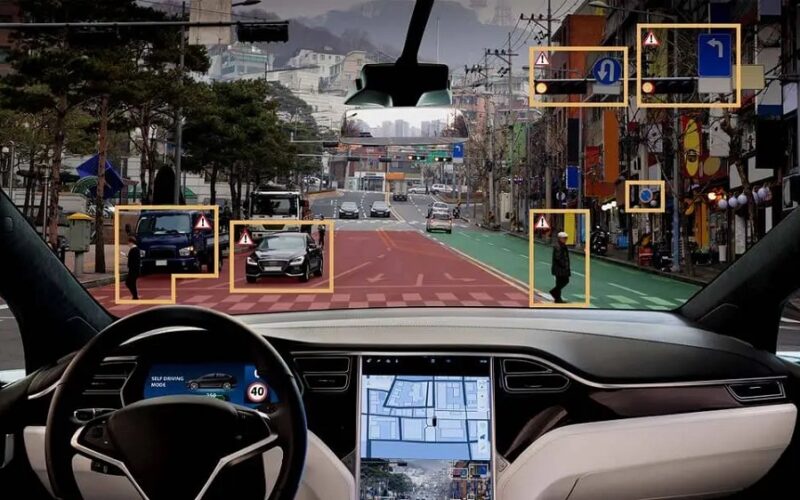
Self-driving cars are no longer experimental curiosities. They are becoming part of everyday transportation systems across several regions of the world. These vehicles rely on artificial intelligence to interpret environments, predict risks, and make split-second decisions without human intervention. As automation advances, a central concern continues to grow: how should machines make ethical choices when human safety is at stake?
The ethical dimension of autonomous vehicle decision-making is one of the most debated topics in modern transportation technology. Engineers, policymakers, ethicists, and the public are working to determine how these systems should behave when facing unavoidable accidents or conflicting safety priorities. Understanding these ethical challenges is essential for ensuring that autonomous vehicles earn public trust and operate responsibly.
Understanding AI Decision-Making in Self-Driving Cars
Self-driving vehicles depend on advanced AI systems that combine machine learning, sensor fusion, and predictive analytics to operate safely. Cameras, radar, LiDAR, GPS, and onboard computing systems work together to analyze surroundings in real time.
These systems perform several critical tasks:
- Detect objects such as pedestrians, cyclists, vehicles, and road signs
- Predict movement patterns of nearby road users
- Evaluate potential risks
- Choose the safest possible driving action within milliseconds
Unlike human drivers, autonomous vehicles follow programmed decision frameworks rather than instinct or emotion. This makes their choices consistent but also raises questions about how those decisions should be designed.
Why Ethics Matter in Autonomous Driving
Traditional vehicles place responsibility on human drivers. Autonomous vehicles shift that responsibility toward developers, manufacturers, and regulators. Ethical programming determines how vehicles respond during unavoidable crash scenarios, how they prioritize safety, and how they balance risks between passengers and pedestrians.
Ethics become especially important when:
- Multiple people could be harmed in different ways
- A crash cannot be completely avoided
- Legal responsibility is unclear
- Cultural expectations influence acceptable behavior
Because AI systems follow structured logic, their decision-making principles must be transparent and defensible.
The Classic Ethical Dilemma: The Modern Trolley Problem
One of the most discussed scenarios in autonomous vehicle ethics resembles the philosophical trolley problem. This situation asks whether a vehicle should protect its passengers or minimize total harm to others.
For example, a self-driving car may face two unavoidable options:
- Continue forward and risk injuring pedestrians
- Swerve and risk harming passengers
Although these situations are rare, they highlight deeper questions about how machines should weigh human life during emergencies.
Designers must decide whether vehicles should:
- Always prioritize passengers
- Always minimize total casualties
- Follow legal responsibility frameworks
- Adapt decisions based on contextual data
Each approach has advantages and drawbacks.
How AI Makes Safety Decisions in Real Time
Autonomous vehicles do not rely on a single rule when making decisions. Instead, they use layered decision systems designed to reduce risk at every stage of driving.
These systems include:
Perception Layer
Identifies objects and road conditions using sensors.
Prediction Layer
Anticipates behavior of surrounding road users.
Planning Layer
Selects the safest driving path based on available information.
Control Layer
Executes steering, braking, and acceleration actions.
Ethical logic is embedded mainly within prediction and planning layers, where risk prioritization occurs.
Passenger Safety Versus Pedestrian Protection
A major ethical concern involves balancing the safety of vehicle occupants against people outside the vehicle. Consumers often expect vehicles to prioritize their protection, while regulators emphasize protecting all road users equally.
This tension creates several challenges:
- Buyers may prefer vehicles that protect occupants first
- Governments may require equal protection policies
- Manufacturers must maintain public trust across groups
- Insurance frameworks depend on consistent decision logic
Achieving a fair balance remains one of the most difficult aspects of autonomous vehicle ethics.
Transparency and Public Trust
Trust plays a central role in adoption of autonomous driving technology. People are more likely to accept self-driving cars if they understand how decisions are made.
Transparency includes:
- Clear documentation of safety logic
- Public disclosure of testing standards
- Regulatory oversight
- Independent safety audits
When companies explain how their systems behave in emergencies, users feel more confident relying on automation.
Cultural Differences in Ethical Expectations
Ethical preferences vary across countries and communities. Research studies have shown that different societies prioritize safety decisions differently.
For example:
- Some cultures prioritize protecting younger individuals
- Others emphasize protecting passengers first
- Some support minimizing total casualties regardless of role
Because autonomous vehicles operate globally, manufacturers must consider how ethical expectations vary between regions.
Legal Responsibility in Autonomous Decision-Making
Legal accountability becomes complex when machines replace drivers. Determining responsibility after an accident may involve several parties:
- Software developers
- Vehicle manufacturers
- Fleet operators
- Infrastructure authorities
- Regulatory agencies
Governments are developing frameworks that define liability based on system control levels and operational responsibility. Clear legal structures help ensure that ethical programming aligns with safety regulations.
Bias in AI Decision Systems
Artificial intelligence systems learn from data. If training datasets contain imbalances or errors, decision-making outcomes may reflect those flaws.
Potential sources of bias include:
- Limited representation of diverse road users
- Incomplete environmental scenarios
- Regional driving pattern differences
- Sensor limitations under unusual conditions
Developers must continuously test and improve models to reduce unintended bias and ensure fair treatment of all road users.
Role of Governments in Ethical Standards
Governments play a major role in shaping how autonomous vehicles behave. Regulatory agencies define safety benchmarks, certification requirements, and acceptable operational limits.
Key responsibilities include:
- Establishing minimum safety performance thresholds
- Approving testing protocols
- Monitoring real-world deployment
- Investigating accidents involving autonomous systems
- Creating ethical compliance guidelines
Strong regulatory oversight ensures consistent safety expectations across manufacturers.
Industry Approaches to Ethical Programming
Technology companies and automotive manufacturers are exploring different strategies to address ethical challenges. Some rely on risk-minimization frameworks, while others prioritize compliance with traffic laws as the primary decision anchor.
Common approaches include:
- Defensive driving algorithms that avoid risk whenever possible
- Scenario-based simulation testing across millions of virtual miles
- Predictive modeling using real-world traffic datasets
- Redundant safety verification systems
These strategies aim to reduce situations where ethical conflicts arise in the first place.
Simulation Testing and Ethical Scenario Training
Before autonomous vehicles operate on public roads, they undergo extensive simulation testing. Engineers expose AI systems to thousands of rare and complex scenarios that would be difficult to replicate in real environments.
Simulation allows testing of:
- Sudden pedestrian crossings
- Unexpected vehicle behavior
- Extreme weather conditions
- Sensor failures
- Multi-vehicle collision risks
Testing helps refine decision-making logic and improve safety reliability before deployment.
Ethical Design Principles for Future Autonomous Vehicles
As technology evolves, researchers are developing structured frameworks that guide ethical decision-making in transportation AI systems.
Important principles include:
Safety First
Protect human life above all other objectives.
Fairness
Avoid discrimination between categories of individuals.
Accountability
Ensure decisions can be reviewed and explained.
Transparency
Provide understandable explanations of system behavior.
Consistency
Maintain predictable responses across similar scenarios.
These principles help ensure that autonomous vehicles operate responsibly within complex environments.
Public Acceptance and Social Responsibility
Public perception strongly influences how quickly autonomous vehicles become part of everyday life. Ethical clarity improves confidence among users, regulators, and transportation authorities.
Social responsibility includes:
- Honest reporting of system limitations
- Responsible deployment strategies
- Continuous performance monitoring
- Collaboration with policymakers
When companies demonstrate ethical responsibility, adoption becomes more likely.
The Future of Ethical AI in Transportation
Autonomous vehicle ethics will continue evolving alongside advances in artificial intelligence and transportation infrastructure. Improvements in sensor technology, predictive analytics, and regulatory frameworks will help reduce uncertainty in machine decision-making.
Future developments may include:
- International ethical standards for autonomous driving
- Real-time cooperative vehicle communication networks
- Enhanced explainable AI decision systems
- Shared responsibility frameworks between humans and machines
As innovation progresses, ethical alignment will remain central to ensuring that autonomous vehicles contribute positively to society.
Frequently Asked Questions
1. Can self-driving cars make moral decisions like humans
Autonomous vehicles do not make moral judgments in a human sense. They follow programmed decision frameworks designed by engineers and guided by safety regulations.
2. Who decides how autonomous vehicles behave during emergencies
Manufacturers design decision logic based on engineering principles, regulatory requirements, and ethical research frameworks approved by government authorities.
3. Are autonomous vehicles safer than human drivers today
In controlled environments and specific operating conditions, autonomous systems often demonstrate strong safety performance, but widespread superiority across all environments is still under evaluation.
4. Can ethical programming eliminate all crash risks
No transportation system can eliminate risk entirely. Ethical programming focuses on minimizing harm and improving response consistency.
5. Do autonomous vehicles treat all pedestrians equally
Developers aim to ensure equal safety consideration for all road users, though continuous testing is required to prevent unintended bias.
6. Will laws change as autonomous vehicles become more common
Yes. Governments are actively updating transportation policies to address liability, safety standards, and ethical compliance for automated driving systems.
7. How can the public influence ethical standards in autonomous vehicles
Public feedback, policy engagement, safety advocacy groups, and transportation research participation all help shape how ethical frameworks evolve.
